[ad_1]
What Is a Counteroffer?
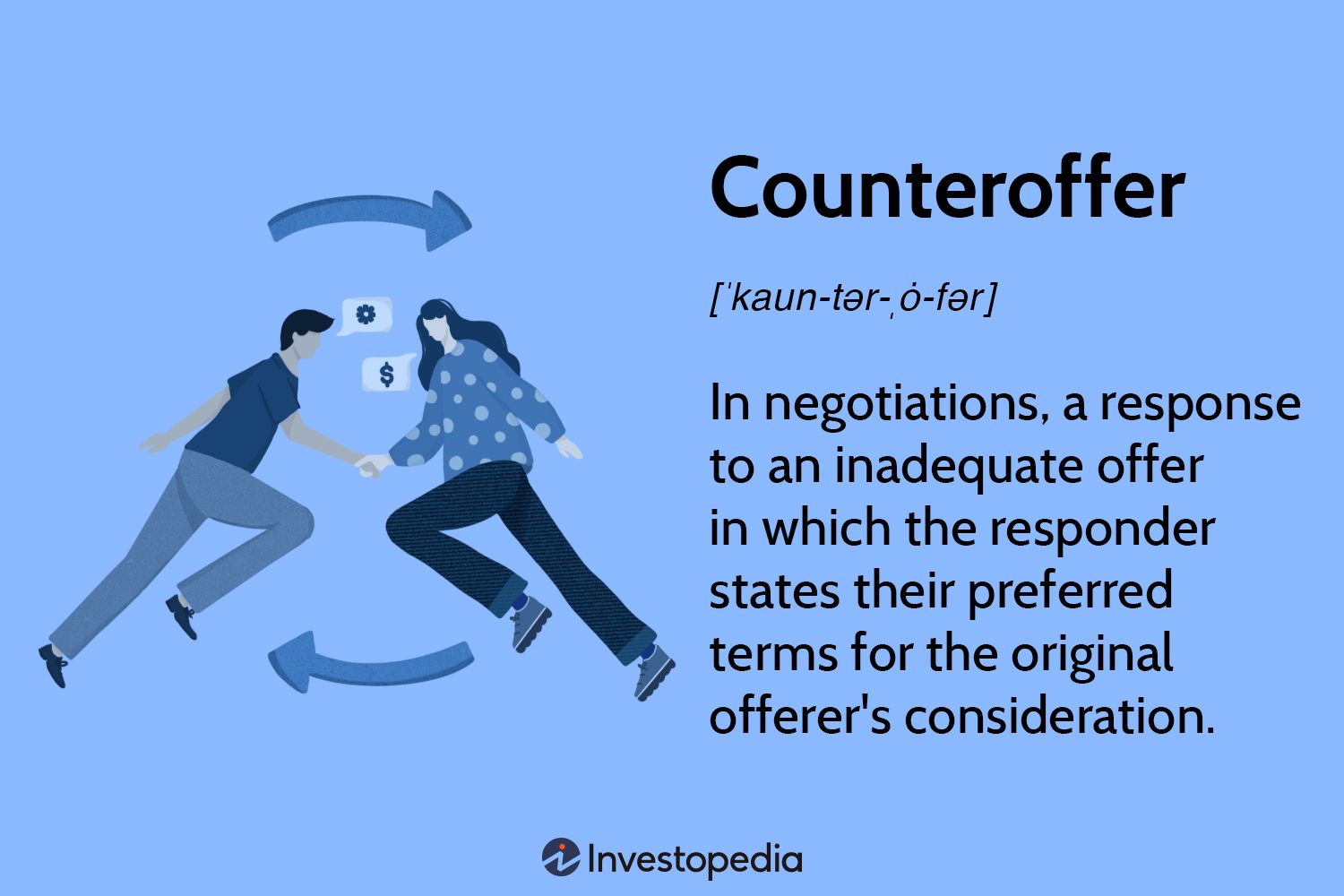
A counteroffer is a response given to an initial offer. A counteroffer means the original offer was rejected and replaced with another one, typically accompanied by three options: accept the counteroffer, reject it, or make an alternative offer.
Counteroffers are prevalent in many types of business negotiations, transactions, contracts, and private and public deals between two individuals or two entities. You may find them in real estate deals, employment negotiations, car sales, private placements, mergers and acquisitions, or takeovers. When negotiating for any reason, it’s important not to let emotions take over and to use facts and strategies.
Key Takeaways
- A counteroffer arises when the initial offer is rejected and replaced with a new one, giving the original offerer options to accept, reject, or counter again.
- Counteroffers are widely used in various negotiations, including real estate deals, employment contracts, and business transactions.
- There is no limit to the number of counteroffers parties can make during negotiations until a mutually acceptable agreement is reached.
- In employment negotiations, strategies to handle counteroffers include accepting, standing firm on original terms, or meeting in the middle.
- Accepting a counteroffer may be suitable if it meets your requirements, but it might impact your reputation with the original employer.
How Counteroffers Work in Negotiations
When two parties get together to negotiate a transaction or business deal, one may put an offer on the table. A counteroffer is a response to the original offer and may alter the terms of the deal, including the price. The price may be greater or less than the original quote, depending on the party. So if the person receiving the original offer doesn’t accept or reject it, they may decide to renegotiate with a counteroffer.
For instance, Ms. X lists her house at $300,000. Mr. Y offers $285,000. Ms. X counters with $295,000, leaving Mr. Y to accept, reject, or counter again.
There is no limit to the number of times each party can counter during negotiations. Each counter should lower the price, signaling the buyer is nearing a final offer.
Neither party is obligated to settle until they agree on a contract, which occurs once the counteroffer is accepted. This is when a binding contract is formed. The contract is enforceable against either party. The counteroffer voids a previous offer, and the entity that presented that offer is no longer legally responsible for it.
Tip
When negotiating, never let emotions affect negotiations—instead, ask questions, do your research, and ask for additional time to consider the new offer.
Key Elements and Conditions of a Counteroffer
A counteroffer may include explanations of the terms of the offer or requests for supplementary information. Finalizing counteroffer negotiations requires the buyer and the offerer to accept the terms without any additional conditions or modifications.
A counteroffer is generally conditional. When the seller receives a low offer, the seller can counter with a price that is deemed reasonable. The buyer can either accept that offer or counter again. The seller can counter the offer. The person receiving the counteroffer doesn’t have to accept it.
Navigating Employer Counteroffers
If you propose employment terms, such as a desired salary figure, and the potential employer comes back with a counteroffer that is lower, there are a few strategies one can employ. You can often get a handle on how much an employer desires you for your knowledge, skills, and experience, as well as how much they like you as an individual and potential team member. Body language, tone of voice, and phrasing can all help you make a more informed decision on how to handle a counteroffer effectively.
The first strategy is to simply take the counteroffer and accept the lower salary. If you think you were highballing your offer, or if you really don’t want to risk losing your dream job over tough negotiations, you may want to consider the counteroffer as good enough.
The opposite strategy is to stick to your guns. Stand firm and decline the counteroffer by reiterating your original offer or terms. While it doesn’t have to be framed as “take it or leave it,” the employer will know where your salary requirements are and, if they really want you, may decide to pay up.
Between these two is to meet their counteroffer in the middle. This may begin a series of back-and-forth negotiations that arrive at fair terms for all parties involved.
A counteroffer may also be proposed to you by your current employer if they know that you are looking to leave and have received an offer elsewhere. You can use these same tactics to respond to this counteroffer and can even use it as leverage with the potential new employer, although you can risk overplaying your hand.
Tip
If you have already received an offer elsewhere, don’t assume that another company will be willing to match that offer. However, it is always safer to begin tough negotiations if you know that the other offer is a fallback.
Examples of Counteroffers
For example, a seller wants to sell a vehicle for $20,000. A buyer arrives and offers $15,000 for the vehicle. The offerer provides a counteroffer, asking for $16,000 with the objective of obtaining a higher price.
If the offeree declines, the offerer can’t force the buyer to purchase the vehicle at $15,000, even though the buyer suggested that price.
Counteroffer at the Workplace
Say that you are interviewing for a company that you are not really so sure you want to work at, as you like your current job but want higher pay and more time off. The new company offers you 10% higher pay and five extra vacation days.
You tell your current employer what you now have on the table and ask them for 20% and 10 days. The employer makes a counteroffer at 15% pay and a week off, take it or leave it.
Should You Ever Take a Counteroffer?
Yes, if the counteroffer is agreeable and will close the deal. However, a counteroffer that doesn’t live up to all of your requirements may not be the best course of action. Moreover, taking a counteroffer can tarnish your reputation with your current employer.
How Do You Reject a Counteroffer?
If you decide to turn down a counteroffer, do so respectfully and graciously. It is helpful to explain your reasons for declining the offer in a short but honest way. You may provide a referral to another potential candidate to fill your role and try to leave on good terms.
Should You Accept the First Salary You’re Offered?
In most cases, it is acceptable to try and negotiate. If you don’t succeed, it is unlikely that you will lose the first offer altogether. Moreover, many companies these days expect some degree of negotiation and therefore start with lower offers than they are willing to make.
The Bottom Line
A counteroffer is a response to an initial offer, designed to make the terms of real estate, car sales, employment, or business investments more favorable. Counteroffers typically result in acceptance, further negotiation, or rejection, and parties are not legally bound until an offer is formally accepted.
Some strategies to consider when negotiating are remaining professional, controlling emotions, thoroughly researching terms and conditions, and rejecting offers graciously to maintain a positive relationship.
[ad_2]