[ad_1]
What Is Carried Interest?
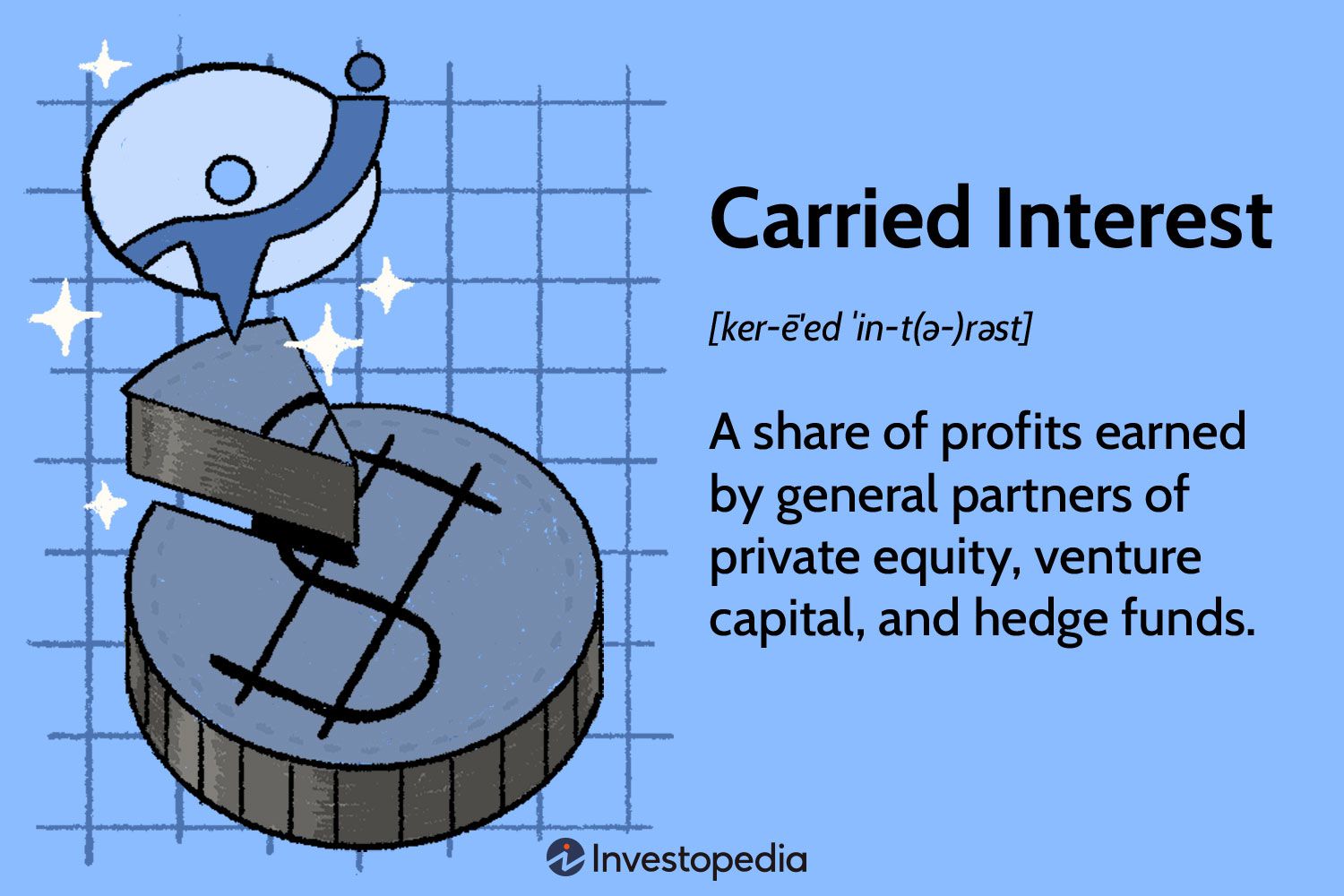
Carried interest represents a profit share earned by the general partners of private equity, venture capital, and hedge funds. This financial mechanism aligns the general partner’s compensation with the fund’s returns, functioning as an incentive that encourages successful fund performance.
Key Takeaways
- Carried interest is a profit share earned by general partners in investment funds and often taxed at a lower capital gains rate.
- This form of compensation typically becomes payable only if the investment fund surpasses a predetermined return threshold.
- Many private equity and venture capital funds charge an additional annual management fee, often around 2%, alongside carried interest.
- The taxation of carried interest has sparked controversy due to its classification as a capital gain, potentially reducing tax obligations for wealthy fund managers.
Understanding the Mechanics of Carried Interest
Carried interest serves as the primary source of compensation for the general partner, typically amounting to 20% of a fund’s returns. The general partner passes its gains through to the fund’s managers.
Many general partners also charge a 2% annual management fee. Unlike the management fee, carried interest is only earned if a fund achieves a pre-agreed minimum return.
Carried interest can also be forfeited if the fund underperforms. For example, if the fund targeted a 10% annual return but only returned 7% for a period of time, investors known as limited partners may be entitled under the terms of their investment agreement to “claw back” a portion of the carry paid to the general partner to cover the shortfall when the fund closes.
Although the clawback provision is not an industry standard, it has been used to argue that carried interest should not be taxed as ordinary income.
The carried interest portion of a general partner’s compensation typically vests over a number of years.
Important
Carried interest is often criticized as a “loophole” allowing private equity managers to pay lower taxes.
Tax Implications of Carried Interest
Carried interest on investments held longer than three years is subject to a long-term capital gains tax with a top rate of 20%, compared with the 37% top rate on ordinary income.
Critics say taxing carried interest as capital gains lets the wealthiest defer and reduce taxes unfairly.Supporters argue that carried interest is taxed similarly to “sweat equity” investments.
The 2017 Tax Cuts and Jobs Act increased the holding period for carried interest from one to three years. In 2021, the IRS issued complex rules about this provision.
Private-equity and venture-capital fund holding periods usually last five to seven years. Some in Congress propose annual reporting of imputed carried interest for immediate taxation as ordinary income.
What Does a 20% Carried Interest Mean?
A 20% carried interest is a performance fee charged to a limited partnership that is paid to the general partners of the limited partnership. Once the initial investment is paid back to the limited partners, the general partners are paid 20% of profits.
Why Is Carried Interest Controversial?
Carried interest is controversial due to how it is taxed. Carried interest is taxed as capital gains, which is a lower tax rate than ordinary income. So partners being paid via carried interest may be paying less taxes than regular employees while earning a higher salary. As such, it creates inequality in taxation between general partners who earn more but pay less in taxes than regular employees who earn less and pay more in taxes.
What Does a Carried Interest Clawback Mean?
A carried interest clawback allows a firm to “claw back” a general partner’s profits if the amount paid to the general partner is above the agreed-upon amount. For example, if a general partner has been approved to receive 30% carried interest but instead received 35% carried interest, then the limited partners can claw back 5%.
Carried Interest: Key Insights and Final Thoughts
Carried interest serves as a significant source of compensation for general partners in private equity, venture capital, and hedge funds, aligning their earnings with their performance rather than initial investment. Typically amounting to 20% of a fund’s profits, carried interest is contingent upon achieving a pre-agreed return and is often taxed at the lower capital gains rate, sparking ongoing debate over tax fairness. Despite controversy, carried interest remains a cornerstone of compensation within the industry, rewarding successful fund management.
[ad_2]